My BEST TIP for Keeping your Spanish or French Class Functioning in the Target Language
In this post I’m going to share with you my most effective strategy for keeping my class functioning in the target language:
Positive Peer Pressure—the BEST motivator. Not only is gentle peer persuasion at the center of my classroom management system, it is also what drives my students to speak the target language almost 100% of the time.
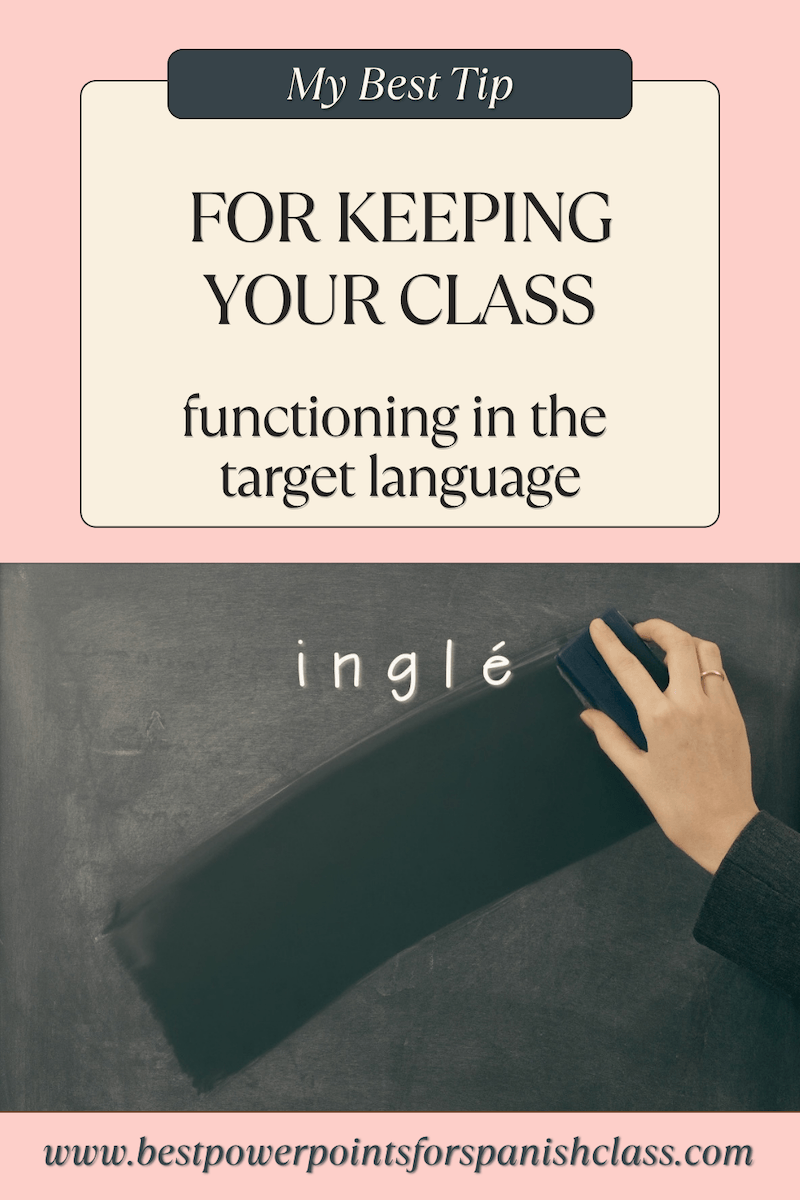
At the beginning of each class period, I write “inglés” (anglais in French) on the board.
If I hear English—ANY—English, I erase a letter. Now it spells “inglé”. Expressions such as “Yeah, wait,” or “I mean” are not allowed. If I hear those or any words in English, I write the Spanish or French equivalent on the board so students eventually express themselves the next time in the target language. Every English word spoken thereafter prompts me to erase another letter. If, at the end of the period, even one letter remains, students get a point added to the next test.
Of course, the first few days students do not get any points. It takes a while for them to realize what “No English” really means. The first points added to a test ignite their desire to speak only in the target language because the rewards have become real to them. Thereafter, any English spoken by peers is met with angry glares or “Shhh.”
In level two, for two weeks, I tell them, every day, “We will be going to all-Spanish soon! Be prepared.” Then, the day before, I explain the rules.
I also tell them that their job is to GUESS what I am saying.
I tell them I don’t expect them to know everything I say, or they would not need to take the class. We practice every day during those two weeks. I say, “Who can guess what I just said?” and I reward them with points for guessing, right or wrong.
Give them tools.
I should add here that I give students tools to ask me what I am saying or how to say a word. I teach them to say, “¿Qué quiere decir? (Qu’est-ce que ça veut dire?)” and, “¿Cómo se dice? (Comment dit-on?)” and I give them points for asking. Then I write the word on the board and it becomes a bonus word on the next test. That way, students don’t feel powerless to express themselves and get into the habit of guessing what I am saying or searching for meaning. I also tell them, however, that I only allow them to ask how to say one or two words, not an entire string of words or sentences. We spend quite a bit of time practicing the use of those expressions. Students have to get used to asking me what I am saying when they don’t know the word well enough to pronounce it.
Of course, there will be whispers you don’t hear and the class becomes very quiet until the students become more proficient. I have become adept at reading lips—the faster they are moving, the more certain I am that they are speaking English, and I erase a letter anyway. They only protest loudly when I’m wrong. When I’m right, I get the sheepish look.
Works like a charm! Try it and you’ll be able to keep your class functioning in the target language too!
Maintain Your Fluency.
It’s important to mention that, in order to speak the target language 90-100% of the time, I must be fluent and as native-like in my speech as possible. Since I am NOT a native speaker, I read extensively in Spanish and regularly watch videos, movies, and social media content—including comedy—in both Spanish and French to maintain my fluency and sharpen my listening skills. Spanish Mama always keeps us up to date on the latest books, movies, and programs to watch to keep up our proficiency. Check out her blog: Spanish Mama
Don’t try this strategy until students are ready to produce
It (hopefully) goes without saying that, no matter what strategy you implement to get students speaking the target language, it will be unsuccessful if they have not been exposed to sufficient language in context. They must spend considerable time digesting comprehensible input, reading and listening to the target language, before they are able to produce.
Are you tired of reading about the need for comprehensible input in my blog posts? There is good reason for my repetition and emphasis. Whenever my students give me a blank stare, I stop asking them to produce, I rewind, and inundate them once again with teacher talk, TPRS stories, listening activities, listen and draw activities, and videos.
Then, once they are ready, I ask them to produce again, and I write “inglés” or “anglais” on the board, with my eraser at the ready.
If your students are not producing—or worse—resisting your efforts to get them to talk, dig into your teacher toolbox for more comprehensible input resources.
READY-MADE RESOURCES FOR COMPREHENSIBLE INPUT
Below are some of my most popular resources for providing CI.
SPANISH
Short Stories and Comprehensible Input for Spanish 1 & 2
Short Stories for the Spanish Preterite Tense
Spanish Double-Object Pronouns TPRS Story
Irregular Preterite TPRS Story
Spanish Subjunctive Adjectives Clauses TPRS Story
Spanish Classroom Objects TPRS Stories
TPRS Illustrated Story for the Verb Tener
Spanish Demonstrative Adjectives Video
Spanish Body Parts and Health Video
Save money and buy the bundle
Spanish I-IV Comprehensible Input, Videos, and TPRS Stories Mega Bundle
FRENCH
French 1 & 2 TPRS Stories and Comprehensible Input
French Double-Object Pronouns TPRS Story
TPRS Story for the French Subjunctive
French Passé Composé TPRS Story
French Avoir Illustrated TPRS Story
Click the following link to read the post: TIP # 2 for keeping your class functioning in the target language.
If you would like to get these tips in your email, subscribe to my newsletter on the HOME PAGE. Make sure to scroll down. You get a freebie for subscribing!
To receive freebies and notifications of new products, click here to FOLLOW MY STORE.
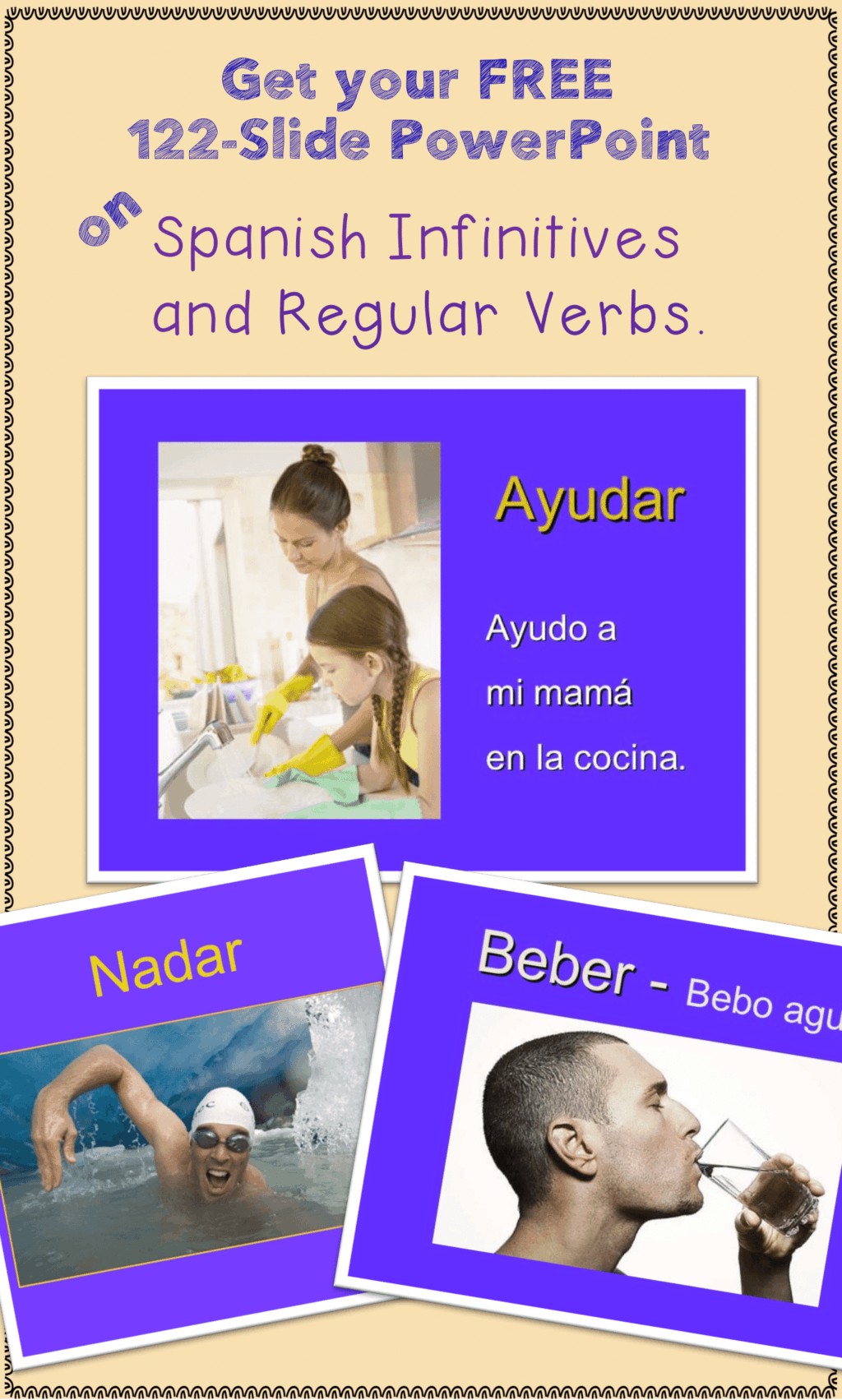
Click on the image below to get
your FREE PowerPoint.
 Pinterest
Get More Freebies and Teaching Tips!
Testimonials
Youtube VideosMy Youtube Videos