

Description
Printable and digital versions of Spanish One Two Three Final Exams with audios, listening assessments, essay written parts and reading sections. The digital versions are self-correcting, editable Google Forms. There are multiple-choice questions so you can delete what you don’t want. The exams assess proficiency in reading, listening, and writing and cover all grammar concepts and vocabulary for Spanish One, Two, and Three (See below). Other resources include a lesson plan, a Table of Contents or Pacing Guide, attention getters, study guides, practice exams, test examples, and sample class grouping for the practice.
SPANISH ONE TWO THREE FINAL EXAMS INCLUDE:
SPANISH ONE FINAL EXAM INCLUDES THE FOLLOWING RESOURCES:
- Autocorrecting, editable Google Forms Spanish One Final Exam with 100 multiple-choice questions and some visuals, two listening assessments in which students listen to the audio and answer comprehension questions, and two reading assessments
- Printable Spanish One Final Exam with 100 multiple-choice questions, two listening assessments in which students listen to the audio and answer comprehension questions, and a written part in which students write an article describing themselves and someone they know
- Two reading assessments that describe two different people, their appearance, likes and dislikes, their families, and where they live. Comprehension questions.
CONCEPTS CONVERED ARE:
✴ Gustar: me gusta; me gustan; ¿Qué te gusta hacer?; Le gusta; les gusta
✴ Plural of nouns, adjectives and verbs: El hombre es alto; los hombres son altos.
✴ Using two verbs in a sentence, first verb is conjugated, second one is infinitive: Quiero comer.
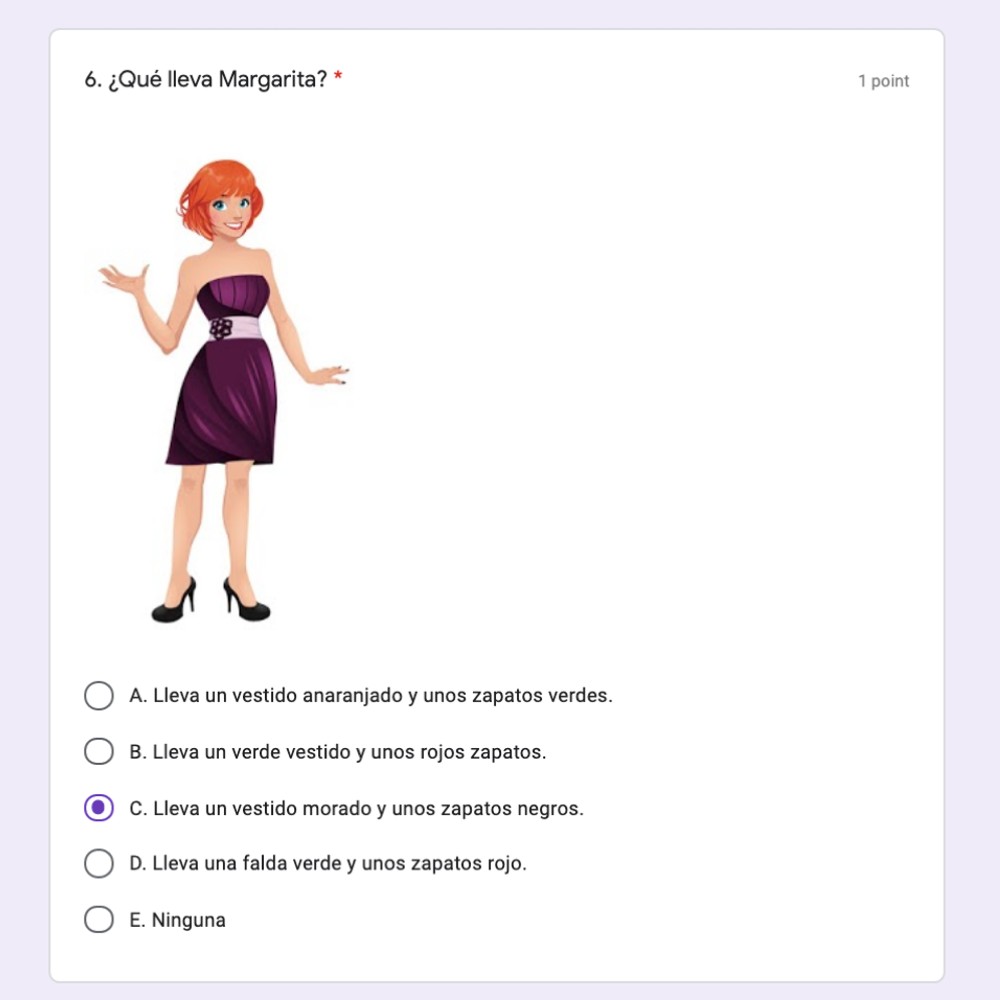
✴ Clothing and colors / la ropa y los colores: ¿Qué lleva Margarita?
✴ Possessive Adjectives: mi, mis, tu, tus, su, sus
✴ Descriptions of people including color of hair and eyes: Es alto, delgado y tiene los ojos azules.
✴ How to say when your birthday is: Mi cumpleaños es el dos de mayo.
✴ Months of the year, days of the week, dates: ¿Cuántos días hay en una semana?/ ¿Cuál es la fecha?
✴ The verb TENER / El verbo TENER
✴ The verb SER / Ek verbo SER
✴ The verb IR; IR + A + INFINITIVE; IR + AL and A LA: Voy al parque. / Vamos a la biblioteca.
✴ Places: la biblioteca, la cafetería, el parque, el gimnasio, la oficina
✴ Family vocabulary: madre, padre, tío, tía, madrastra, abuelo, abuela, hermanos, primos,
✴ Greetings: ¿Cómo te llamas? Me llamo… ¿Cómo estás? ¿Cómo está usted?
✴ Formal and informal ways to address people, formal and informal you: tú, usted
✴ Adverbs: nunca, a veces, siempre, también, tampoco
✴ Regular verbs in the present tense, meaning and conjugations: tocar, hablar, leer, regresar, dibujar, cocinar, patina, correr
✴ Food / La comida vocabulary and related expressions: Tengo hambre; tengo sed; quiero comer; desayuno, almuerzo, cena; huevos, papas, arroz, bistec, pan, carne, pastel, manzana, lechuga, naranja, pescado, jamón
✴ Time and classes / la hora y las clases and related expressions: Son las.. / Es la… / La clase empieza a las diez. / Termina a las…
✴ The verb ESTAR and places: Estamos en la escuela.
✴ The verb ESTAR and emotions / adjectives: triste, cansado, feliz, ocupado, delgado, gordo, perezoso, trabajador, feo, bonito, aburrido, bueno, malo, artístico, gracioso
✴ Adjectives and placement of adjectives: Es un perro gordo. Tiene los ojos verdes. Es un buen alumno.
✴ Culture of Spanish-speaking countries: greetings, food, languages spoken, la quinceañera, la paella, la tortilla española
✴ Objects in the classroom: la grapadora, la puerta, la pantalla, un sacapuntas, un marcador, un bolígrafo, la pizarra, una carpeta, el reloj, la regla, el basurero, las tijeras
✴ How to form yes / no questions: ¿Canta bien Taylor Swift?
✴ How to form interrogative questions and related vocabulary: ¿Dónde? / ¿Adónde? / ¿Quién? / ¿Quiénes? / ¿Cuándo?
✴ Numbers / Los números: Treinta y nueve es…
✴ Commands: levántense, escuchen, entreguen la tarea, vengan aquí,
- Table of Contents and Pacing Guide
- Lesson PlaN
- Study Guide
- Practice Exam and answers
- Scripts for the listening assessments
- PowerPoint Example of how I grouped my students for the practice exam
- Test Examples PowerPoint that explains how to fill in the scantron sheet and answer the questions
SPANISH TWO FINAL EXAM INCLUDES THE FOLLOWING RESOURCES:
- Autocorrecting, editable Google Forms Spanish Two Final Exam with 128 multiple-choice questions
- Printable Spanish Two Final Exam with 128 multiple-choice questions, and a written part with two options:
OPTION ONE: Students write two essays: First, they write about their daily routine using ten or more reflexive verbs and words of transition (Escribe tu rutina diaria en el presente. Usa palabras de transición como, “después, luego, también, entonces,” etc.)
Then, they write an essay about what they did yesterday. (Escribe lo que hiciste ayer. Inventa cosas extraordinarias usando verbos en el pretérito.)
OPTION TWO: Students choose between two topics for an essay: 1. Escribe lo que hiciste ayer. Inventa cosas.
2. Escribe un cuento en el pasado. Usa el pretérito. Usa diez verbos diferentes o más. Usa palabras de transición.
CONCEPTS CONVERED ARE:
· Expressions with tener (tener frío, tener éxito, tener prisa, tener cuidado, tener razón, tener lugar, tener miedo, tener sueño; tener hambre; tener sed…)
· Present participle and present progressive: Estamos mirando la tele.
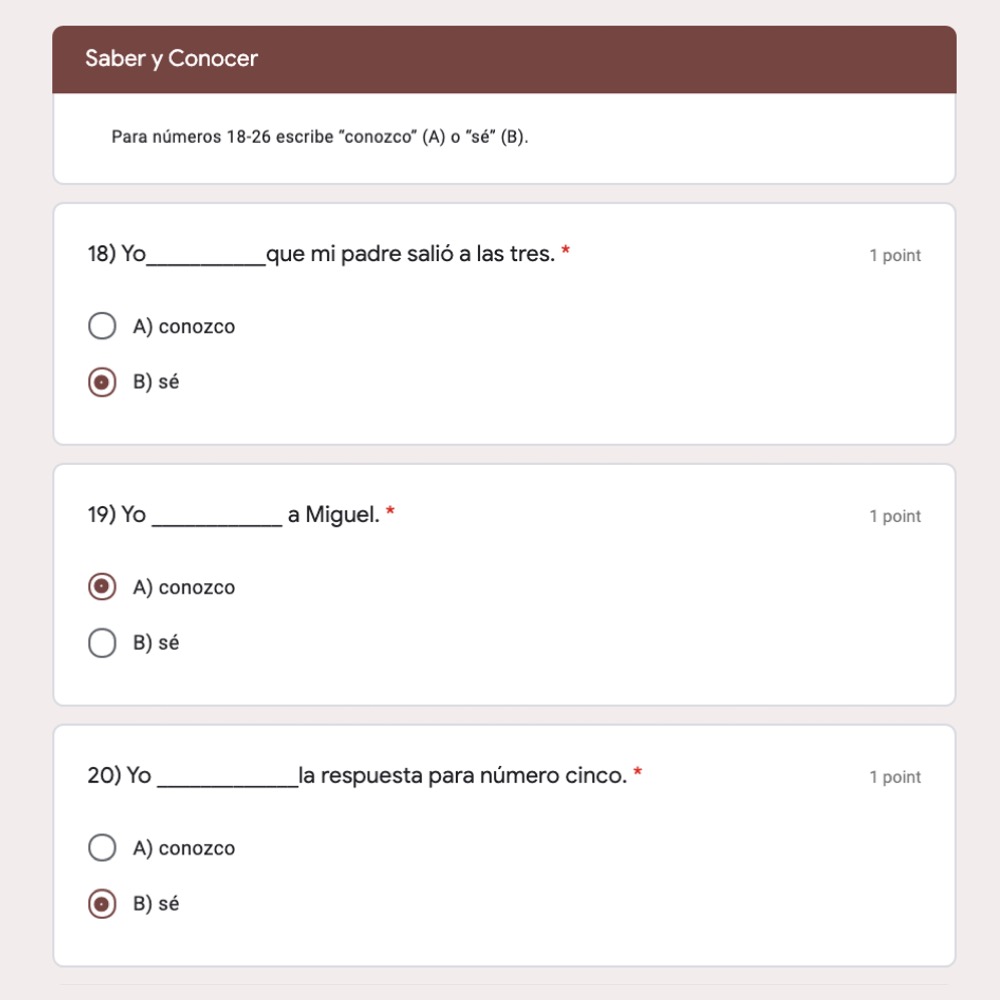
· Saber vs. conocer
· Regular and Irregular Preterite
· Direct and indirect object pronouns (Le di el libro a Raúl.)
· La a personal / The personal a
· Prepositions of location / las preposiciones: al lado de ti; a la derecha de ti; a la izquierda; entre; detrás de; delante de; enfrente de; lejos de; cerca de, etc.
· The house and chores vocabulary / La casa y los quehaceres
· Stem-changing verbs
· Reflexive verbs and daily routine and related vocabulary / Los reflexivos y la rutina diaria: se maquilla, se mira, se divierte, se cepilla, se acuesta, se despierta, se aburre, se viste, se baña, se afeita, se despide de, la toalla, el cepillo de dientes, la seda dental, una almohada, etc.
· Weather vocabulary / El tiempo
· Ser vs. estar
· The body and health, body parts, and related vocabulary / el cuerpo y la salud: ¿Cómo te sientes? ¿Qué te duele? Tengo gripe. Tengo fiebre. Tengo un resfriado. El médico, la cara, el brazo, la pierna, los dedos, el cuello, el tobillo, la mano, la muñeca, la rodilla, el codo, las orejas, el oído, la espalda, las sentaderas, el muslo, el estómago, la cintura, los labios, la boca, la nariz, los ojos, las cejas, etc.
· GO verbs; Los verbos GO
- Table of Contents and Pacing Guide
- Lesson Plan
- Study Guide
- Practice Exam
SPANISH THREE FINAL EXAM INCLUDES THE FOLLOWING RESOURCES:
- Autocorrecting, editable Google Forms Spanish Three Final Exam with 145 multiple-choice questions
- Printable Spanish Three Final Exam with 145 multiple-choice questions, a listening section in which students listen to the audio and answer comprehension questions, and a written part in which students read the story and write an ending for the story using the preterite and imperfect.
CONCEPTS CONVERED ARE:
· Direct and indirect object pronouns
· Double object pronouns
· Synonyms and vocabulary: Some words and expressions are, “reunirse, seguir haciendo algo, pasarlo bien, romper con alguien, enviar, mandar, subir, ascender, bajar, bien educado, mal educado, me cae bien, enojarse, enfadarse, quedarse en casa, tomarle el pelo, estar enamorado, comprometerse, estar comprometido, dejar de hacer algo, hacerle caso a alguien, darse cuenta, tener éxito, llevarse bien, despedirse de alguien, suceder, soñar con, molestar, caber, tardar en hacer algo.”
· Reflexive verbs (los reflexivos)
· Los cambios ortográficos en el tiempo presente (cuezo, hueles, elijo, venzo, vuela, elijo, quepo)
· The future tense (el futuro)
· The conditional tense (el condicional)
· The present perfect tense (el presente perfecto)
· Regular and irregular preterite
· The preterite vs. imperfect (el pretérito y el imperfecto)
· The comparisons and superlative
· Extended family vocabulary
· The gerund
· Estar + past participle (el participio pasado): Los libros están cerrados.
· Ser vs. Estar
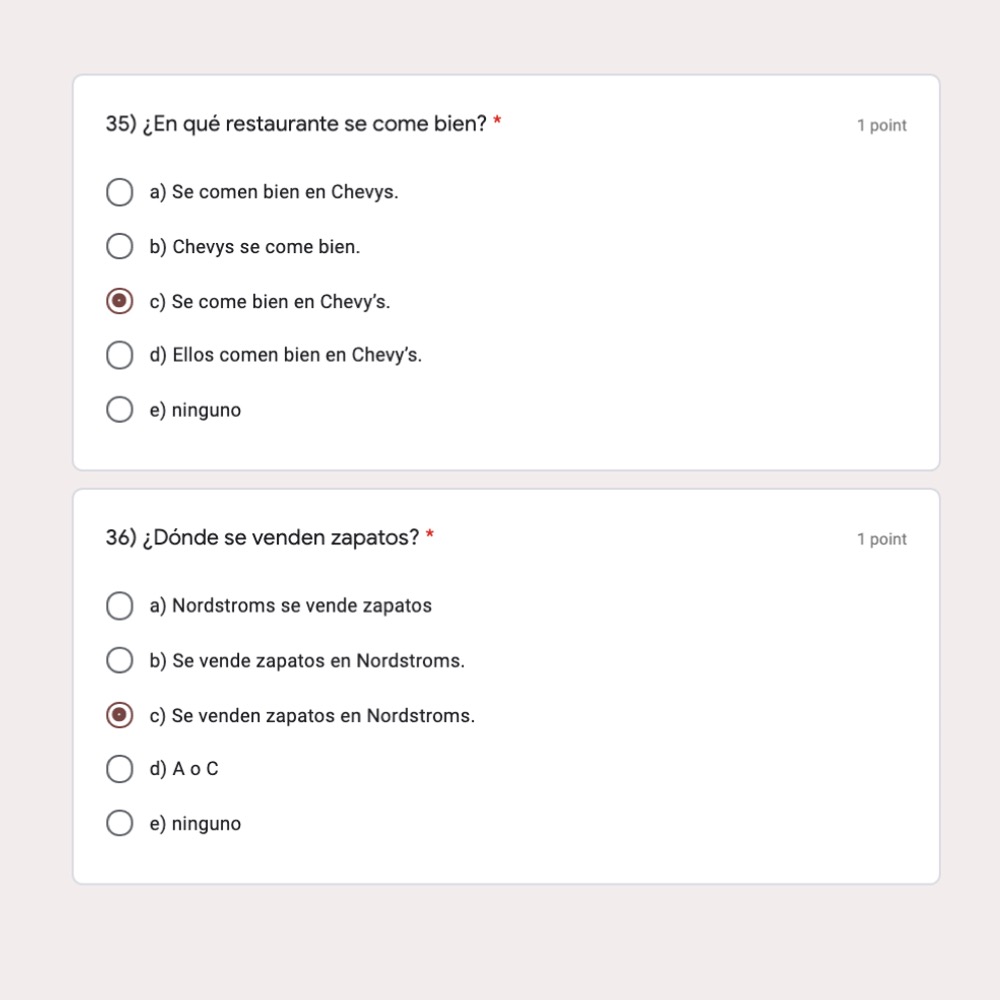
· Impersonal SE and accidental se (El se impersonal y el se no intencional)
- Table of Contents and Pacing Guide
- Lesson Plan
- PowerPoint Example of how I grouped my students for the practice exam
SPANISH ONE TWO THREE FINAL EXAMS BUNDLE IS INCLUDED IN THE FOLLOWING MONEY-SAVING BUNDLES:
Spanish One Two Three Tests and Quizzes
Spanish Google Forms Activities | Assessments Bundle
To receive freebies and notifications of new products, click HERE to follow my store!
**************************************************************************************************************
OTHER PRODUCTS THAT MAY INTEREST YOU
Spanish One Two and Three Interactive Notebook and Google Drive Activities




Reviews
There are no reviews yet.