
How to Maintain Your Fluency in Spanish and French
I wanted to entitle this post, “How I maintain my fluency in Spanish and French as a non-native speaker,” but that title was too long. However, I really am going to tell you how I do it and, hopefully, you will get a few ideas for how you can stay fluent as well. Below are nine ways I keep my brain up to the task.
I am highly motivated to keep up my fluency in Spanish because I hate humiliation. I remember the knot in my stomach and the sweaty palms when, as a novice teacher with barely-fluent language skills, I had to call non-English-speaking parents. And then there were the times I was called upon to interpret in the office for a Spanish-speaking parent.

Here’s me on the phone: “Repita, por favor.” (I have trouble hearing on the phone in ENGLISH!)
One lady in the office asked for another interpreter, even though I understood her perfectly. THAT is humiliation!
Although originally a French teacher (with near-native fluency), I began teaching Spanish early in my career because of the huge shortage of Spanish instructors. I went back to school, got my Masters, studied in Spain and Mexico and, thus, polished my language skills and built up my confidence.
However, those skills evaporate in a short while if not maintained. And, I still have many opportunities to embarrass myself as many of my buyers speak only Spanish and would prefer to speak to me in THEIR main language, not mine.
So, one of my priorities is to stay fluent. And, not only fluent, but literate.
HERE IS HOW I MAINTAIN MY FLUENCY IN SPANISH AND FRENCH
1. READ, READ, READ IN SPANISH OR FRENCH.
Reading is a fantastic way to maintain language proficiency and assimilate unfamiliar vocabulary. We need comprehensible input just like our students do. Reading, my favorite pastime, is a reward as well as a fulfillment of a goal.
It’s easy to access authentic materials online these days. Have a question? Why not kill two birds with one stone? Type your query in the search bar of your favorite web browser in Spanish or French and you’ll find many interesting articles. Or go to Amazon or your favorite bookstore and type in “Spanish Novels” or “French Books”. There is never a shortage of good books and I have read many notable ones.
Below is a list of books I have read that I highly recommend for Spanish:
- Amante japonés by Isabel Allende
- Retrato en Sepia by Isabel Allende
- El tiempo entre costuras by María Dueñas (Read it twice and was spell-bound both times. SO well written!)
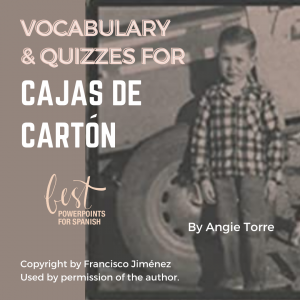
- Cajas de carton by Francisco Jiménez
- Senderos fronterizos by Francisco Jiménez
I have read Senderos fronterizos five times. Each time I read it, I am so moved I never fail to shed a tear or two. My high school students loved it, too. It’s a wonderful read for Spanish Four or AP Students. If you would like to assign it, here are all the vocabulary and quizzes you will need to teach it. Senderos fronterizos Vocabulary and Quizzes
- En el tiempo de las mariposas by Julia Alvarez
- La Quinta Montaña by Paulo Coelho
- El mapa del tiempo by Félix J. Palma This author is so gifted! It’s not only a work of art but great for building your vocabulary. I’ve never seen so many words I’ve never seen before! 🙂
- La distancia entre nosotros by Reyna Grande (Quite a few grammar errors and typos, missing or misplaced accents, but still a great read and well-written.)
- La catedral del mar by Ildefonso Falcones: It’s quite violent and the injustices are soul-wrenching but once you get past the beginning, you get into the characters and it holds your interest.
- Caperucita en Manhattan by Carmen Martín Gaite
- La cuenta atrás para el verano by La Vecina Rubia (anónimo): I can’t recommend this book as a page-turner. It was a slog to get through from time to time and it felt like I was reading an adolescent girl’s diary. However, it is filled with Spanish idiomatic expressions and colloquialisms.
- Violeta by Isabel Allende: This author knows how to hold your interest and it’s a pretty easy read. However, as a Christian, I struggled with her anti-faith bias and feminist views. For example, she implied the idea of hell is an outdated fairy tale: “In those days, hell existed.” (Because we all know it doesn’t anymore?)
There are many more in my “Books to Read” Pinterest board. Click on my Board to see all the books I recommend. I only post books I think are so good they MUST be on your bucket-list read: Books to Read
Here is a list of books for French (recommended by other French teachers):
- Si c’était vrai by Marc Levi
- Chanson douce by Leïla Slimani
- Les fleurs du Coran by Monsieur Ibrahim
- La délicatesse by David Foenkinos
Since I have not read the French books above, I would love to hear your book reviews!
In addition, I welcome any and all book recommendations. If you have read a Spanish or French (or even English) book that you LOVED, please share in a comment.
By the way, a good source for foreign books is Alibris.com. You can get new and used books at that site for really low prices.
TIPS FOR READING IN A SECOND OR THIRD LANGUAGE:
- Be patient. The first quarter of the book will be a slog, looking up every other word. After that, the author uses the same words. No writer has an exhaustive vocabulary, no matter how erudite. You won’t notice that in your own language.
- Participate in book clubs in which you discuss the book.
- Use wordreference.com to look up words and linguee.com to look up phrases and expressions.
2. SPEAK SPANISH OR FRENCH REGULARLY WITH A NATIVE-SPEAKER FRIEND.
My friend, Isabel, is Ecuadorian and I visit with her every few months to chat in Spanish. It helps that she was a Spanish teacher and her grammar is flawless.
I also talk with a Spanish language exchange partner (I love the Castilian accent) twice a month via Zoom or Messenger. We speak English for half an hour and Spanish for the remaining time.
3. ZOOM WITH NATIVE SPEAKERS IN BOOMALANG AND TALK ABROAD.
There are so many online resources now that make connecting with native Spanish speakers or French language partners a cinch. Two examples are Boomalang and Talk Abroad.
So. Much. Fun. I highly recommend both companies. For a reasonable price you can talk to a native speaker via a Zoom-like platform. It’s like having your own private tutor! I spoke with a delightful French woman and a man from Spain. If you’d like to know more about those platforms, click on the following link to read the blog post I wrote on the topic: How to Get Your Students Speaking the Target Language Outside the Classroom
4. WATCH TELENOVELAS OR TV SHOWS WITH A FRIEND.
My neighbor and I are currently crying, laughing, and shrieking our way through weekly episodes of Gran Hotel. (Again, excellent comprehensible input for your language learners.) We watch with the Spanish subtitles on, so we don’t miss anything. If we hear or see a word or expression we don’t know, we pause and whip out our www.wordreference.com.
I recommend Gran Hotel for AP Spanish students. They will be captivated! What are your favorite telenovelas or Spanish or French programs?
5. TELEGRAM AND TEXT NATIVE SPEAKERS.
Many teachers contact me by texting or through the Telegram app, and I respond.
6. LISTEN TO SPANISH OR FRENCH RADIO AND PODCASTS.
Songs are a fun way to keep thinking in the target language. And it beats sitting quietly in the car at a stoplight. I also listen to episodes of Radioambulante to keep my mind occupied while in the car.
7. TEACH UPPER-LEVEL SPANISH OR FRENCH COURSES
When I was teaching only lower-level Spanish, I was speaking lower-level Spanish, i.e. using simple vocabulary and basic sentences. Nothing keeps your Spanish polished like teaching heritage and native speakers. The heritage speakers keep you fluent and keep you on your grammatically-correct toes as you enlist their help with synonyms while gently teaching them correct grammar and academic language. Also, the academic language in the advanced readings keeps you mentally sharp.
I USED to be quadrilingual. Yep. I spoke Italian. Now all I can say is, “Mangia.” I USED to play the guitar. Now my fingers have forgotten how to play the chords and how to finger-pick. Use it or lose it. It’s like working out; it’s a life sentence. If you don’t keep it up, your skills will get flabby.
Click on the following link to read about more ideas about how to maintain your language proficiency in Spanish: Stay Fluent: Ten Ways to Maintain Your Foreign Language Skills
8. WATCH SPANISH OR FRENCH COMEDIANS ON TIKTOK OR YOUTUBE.
Want to improve your listening skills, learn useful vocabulary, and train your ear to understand different dialects? Search YouTube channels and TikTok platforms for Spanish or French comedians or speakers. Find your favorites and watch them regularly.
The best way to watch is with captions. Why captions? Captions are a great way to improve our pronunciation of words. How else would I know that what sounds like one word is actually three smashed together with missing vowels and consonants? The English equivalent would be “Nawmean?” which, translated into regular speech means, “Do you know what I mean?” Also, the captions allow me to pick up new vocabulary, particularly street language.
The second or third time, I listen again without looking at the captions to inure myself to the speed and different accents.
9. WATCH TED TALKS IN SPANISH OR FRENCH ON YOUTUBE:
Another way to get great practice is by listening to Ted Talks in Spanish or French. Besides learning new words and getting used to the pacing of fluent speakers, you gain new insights about the world in general. Make sure the captions are set to Spanish or French. Go to the video settings (gear icon), click on “Subtitles,” and check the available options. Some videos offer manually translated captions, which are more accurate than automatic ones.
10. IMPROVE YOUR PROFICIENCY WITH SPANISH NON-STOP
I just spoke with the founder of Spanish Non-Stop and had a wonderful experience. He has a ten-week program just for teachers who want to maintain their fluency or improve their overall proficiency. The program is personalized, completely tailored to the specific needs of each person. For example: During your first free conversation or consultation, he will identify the areas where you struggle with fluency and tailor the session to help you improve. As you speak, he will pinpoint specific challenges and guide you through targeted oral exercises to strengthen those skills in real time.
For example, I asked him to show me how he would help a person master SER VS. ESTAR. He explained the differences and began speaking to me using sentences and expressions with the two verbs. Then, he showed me documents with expressions that use ser and estar and we practiced more. He also sent me the documents so I could practice during the week. Super helpful! Nacho is a teacher of teachers. For more information, go to spanishnonstop.com or Spanish Non-Stop
As you can see, there are many creative ways to keep up your language proficiency. The most important thing is consistent practice. The less time you spend in a language immersion setting, the rustier you will get in your second language. (Or third. My French is seriously corroded.)
What do YOU do to maintain your language fluency? Do you conduct your PLCs (Professional Learning Communities) or department meetings in Spanish? Eat lunch with native speakers? I hope some of these ideas will work for you.
SPEAKING IDEAS FOR STUDENTS
Your language learners need to practice speaking, too. Below are some of my most popular speaking activities:
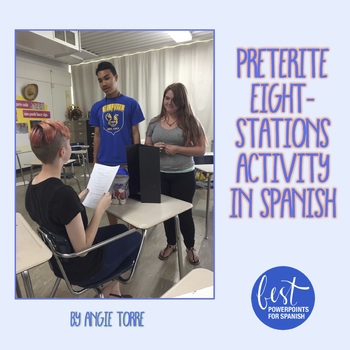
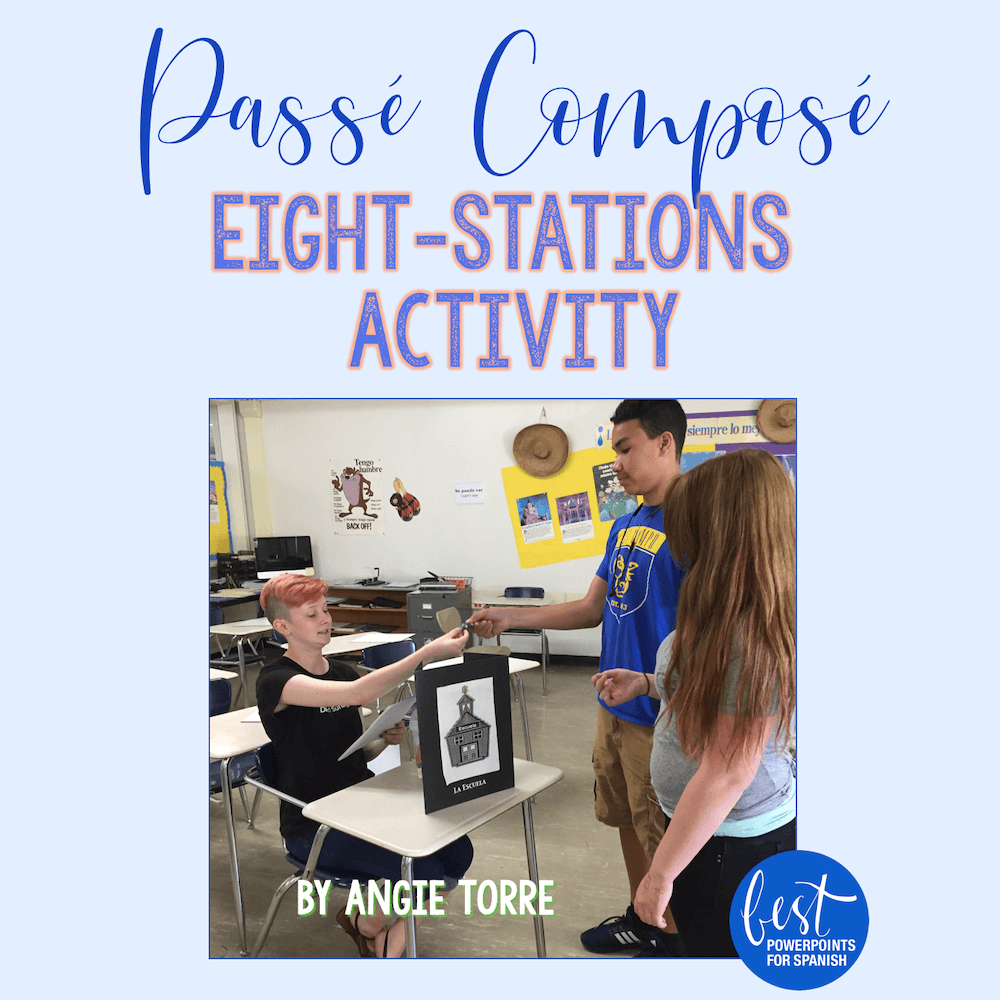
Students talk all period about the past with the 8-Stations Preterite or Passé Composé Group Speaking Activity.
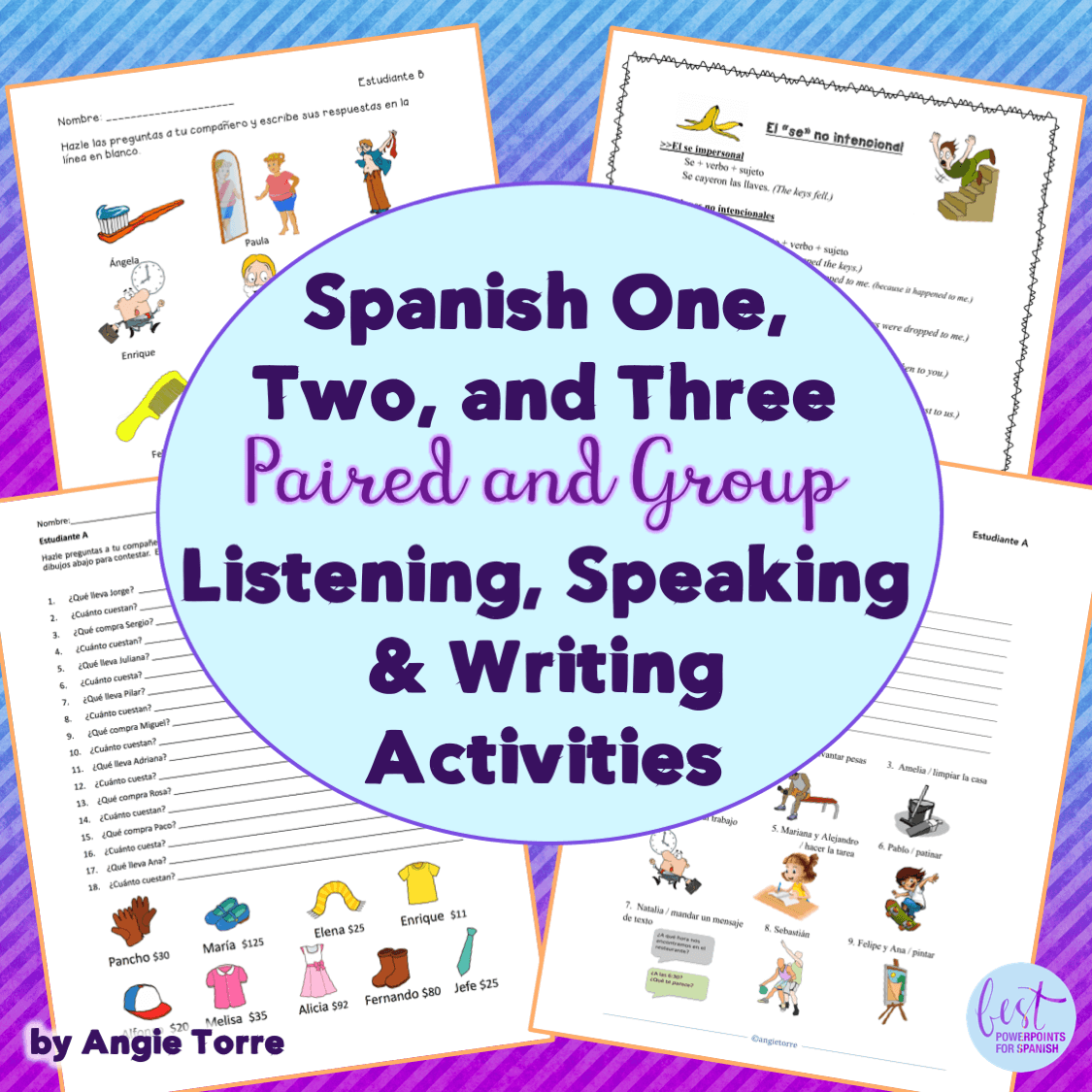
If you’d like to keep your students speaking Spanish all year, check out this bundle of Spanish Speaking and Listening Paired and Group Activities.
Here’s another super popular speaking activity: SPEED DATING for practicing the tú, used questions and the Spanish imperfect tense.
Students LOVE to talk about love and relationships. A good way to take advantage of that interest is to teach them vocabulary related to Valentine’s Day. I have all the resources you need to do that. The PowerPoint has eye-popping visuals. The hands-on Interactive Notebook Activities have fun clipart and keep students engaged. And the Google Drive Activities are always a winner. I get 100% student engagement with digital activities. Here is the link to El día de los enamorados PowerPoint and Activities.

Don’t miss out on freebies! Make sure to follow my STORE in order to get notified of updates on products, free resources, and new products.Happy teaching!
If you would like to receive these blog posts with teaching tips and freebies in your email, subscribe to my monthly newsletter: BestPowerPointsforSpanish Just scroll down to the bottom and click, “Sign up.”
CONNECT WITH ME ON SOCIAL MEDIA, TOO!
 Pinterest
Get More Freebies and Teaching Tips!
Testimonials
Youtube VideosMy Youtube Videos
Pinterest
Get More Freebies and Teaching Tips!
Testimonials
Youtube VideosMy Youtube Videos



Good suggestions, and glad for the Isabella Allende recommendations. I do have a similar post, from a bit of a different perspective which you can see in the title.
https://senordineroman.wordpress.com/2018/02/04/the-road-to-superior-and-getting-heritage-teachers-there/
Chris! So good to hear from you! Great blog post. May I add the link to mine?
Any suggestions for French?
Hi, Tammy: The suggestions are the same, except for the books. You can still use Boomalang or Talk Abroad, talk with a native speaker, watch videos and soap operas in French. I will ask in my Facebook group for a list of French books to add to the post. Thanks for the suggestion! Angie
I just read L’affaire sur Harry Quebert by Joel Dicker. It was full of unexpectant twists and turns! A captivating, relatively easy read.
Hi, Cindy:
Wonderful! Thank you for sharing.
Angie